Within the intensely competitive realm of contemporary professional oversteer competition, victory is far more than purely a function of brute torque or pilot aggression. Rather, it is now a intricate discipline that demands a painstaking blend of selecting a proven vehicle platform, arming it with the correct drift-spec hardware, and, most importantly, grasping its dynamic performance on the circuit through cutting-edge vehicle dynamics analysis tools. This comprehensive manual will serve as your roadmap from the very first concept of a project car all the way to the final engineering-refined adjustments that elevate a powerful car into a predictable podium finisher. We will examine in detail the art and science of car suspension tuning, demonstrating how a advanced drift tuning app like a dedicated telemetry system eradicates approximation and provides exceptional insight into your vehicle's true performance.
The foundation of any successful drift machine is, indisputably, the platform itself. Certain platforms have earned renowned status within the worldwide sliding scene due to their built-in balance, robust construction, and the enormous availability of specialist support available. Choosing the correct starting point is the primary and most significant selection a builder will make. For instance, the the E36 generation BMW is commonly accepted as one of the greatest overall drift platforms of history. Its almost ideal evenly distributed mass, combined with a RWD setup and extremely reliable six-cylinder powerplants, establishes a platform that is simultaneously accessible for beginners and highly effective in the possession of a professional driver. The evolution of this philosophy, the BMW E46, refines these attributes with a more developed structure, wider stance for improved high-speed stability, and even more lock straight from the OEM. A distinct dominant option in the top-level arena is the Corvette C6.
This American track weapon introduces a distinctive combination of benefits to the sliding sport, featuring a lightweight aluminum chassis, a rear-mounted gearbox and differential unit that aids in an ideal weight distribution, and the immense low-end power of a large-displacement GM LS engine. This blend makes it an utter monster on track, able of initiating and maintaining extended drifts with seemingly minimal use of throttle. For builders desiring exceptional bang-for-the-buck, the Nissan 350Z stands out as a prime candidate. It comes from the manufacturer with a robust body structure, a competent OEM limited-slip differential, and the responsive V6 motor that delivers sufficient power and torque for practicing and advancing in the activity. Its follow-up, the Nissan Z34, presents additional advancements in body strength, handling precision, and overall motor power, establishing its place as a common pick among serious pilots. Additional legendary cars that warrant consideration encompass the nimble rotary-powered Mazda FC, the ever-present Nissan S13, the torque-rich Ford Mustang SN95, the more recent E90 3 Series, and the small yet unbelievably engaging and forgiving Mazda MX-5. All of these chassis provides a distinct palette of traits, complexities, and potentials, but they all have in common the core elements required to be transformed into a competitive drift machine.
However, selecting the right platform is only the starting point. To access the full capability of any of these cars, substantial upgrades to the steering geometry and suspension systems are absolutely non-negotiable. This is where the domain of performance drift-spec parts becomes sharp focus. The most most transformative modification for a purpose-built drift car is the fitting of a high-performance steering angle kit. These engineered kits, like those engineered by industry leaders like SLR Speed, are engineered to dramatically expand the chassis's maximum turning lock. A OEM road car is severely limited in how far its front wheels can rotate, a design trade-off for daily driving. In sliding, however, extreme countersteering is continuously necessary to catch and hold a angle. An angle kit exchanges the factory uprights, linkages, and often control arms with components that enable the front tires to attain angles over 70 or even 80 °, as opposed to a average OEM setting of around 40 to 50 degs.
This tremendously increased capability gives the driver with significantly greater command during a drift, making it considerably easier to initiate a oversteer moment, maintain it through a extended corner, and switch seamlessly from one angle to another. The difference in handling is truly revolutionary. Combined with a properly chosen modification is the just as critical modification to the chassis's damping system. Store-bought or including expensive street dampers are simply not engineered for the particular and extreme requirements of drifting. A purpose-built pair of suspension units is paramount. These specific coilovers incorporate specific valving and spring rates that are tuned for the rapid mass transition that is characteristic of aggressive driving. When a operator begins a angle, the vehicle's inertia is transferred violently to the outside of the corner. Optimal competition dampers manage this shift in a controllable way, permitting the vehicle to find its balance rapidly and offering the driver clear feedback through the controls and driver's seat. They also enable precise adjustment of ground clearance, damping rate, and cross-weight, which are all key aspects of dialing in the vehicle's dynamics to a specific track or competition approach. Together, a high-quality angle modification system and a expertly chosen pair of competition coilovers form the core physical foundation upon which all later tuning is constructed.
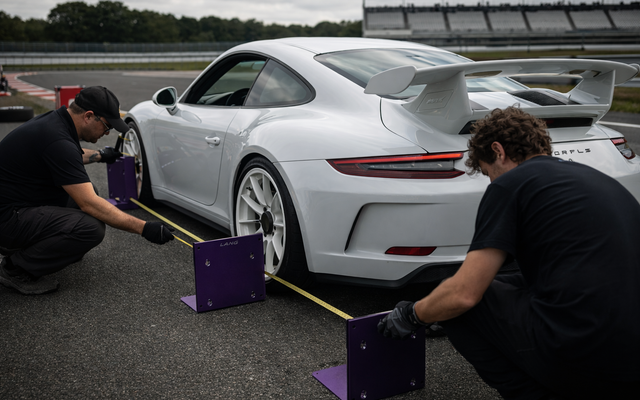
Once the essential hardware is in place, the next essential step in the development is the detailed adjustment of the car's wheel angles. This is the realm of car suspension tuning, a methodology that can feel intimidating to the uninitiated but is, in fact, the defining factor to transforming a set of fast pieces into a harmonious and consistent whole. The most debated aspect of suspension geometry for sliding is definitely camber angle. Camber angle is the tilt of the tire in relation to the upright plane when looked at from the front of the vehicle. When the top of the wheel is angled towards the chassis, this is called negative camber. In oversteer driving, negative camber on the front wheels is universally applied and is regarded as necessary. The reason is deeply related to tire contact.
When a car is turning at high angles, the chassis leans toward the external of the corner. This body roll forces the outer front tire to diminish its optimal grip area with the asphalt. By adding inward lean, the tire is pre-tilted to compensate for this roll. As the vehicle rolls into the bend, the tire gains a better contact patch against the asphalt, increasing its bite at the precise point when it is most required for directional command. Typically, front axle adjustments for a dedicated drift machine range from approximately -3 degrees to as extreme as -5 degrees or even greater, depending on the details of the vehicle setup, rubber selection, and operator feel. The rear wheels also utilize inward tilt, but the angles are usually more conservative and subtler than the coilover setup tips front. Excessive negative camber at the rear can cause the vehicle to extremely prone to oversteer and difficult to control on power use, as it diminishes the effective contact patch of the powered wheels during linear throttle application. Therefore, rear camber settings are commonly in the ballpark of -1 degree to -3 degrees, achieving a careful balance between giving sufficient cornering grip to assist in starting and holding the drift while simultaneously maintaining effective traction for exiting the turn. camber angle is just one element of the more complex suspension geometry picture, which furthermore encompasses toe, self-centering steering, and suspension-induced vehicle dynamics tool steering adjustment.
Toe describes the angle of the tires when viewed from a bird's-eye view. Inward toe means the leading edges of the tires are nearer together than the rear edges, while negative toe means the opposite. For sliding, a modest amount of front toe out is commonly used to quicken the initial response steering response, making the car feel more agile and eager to start a oversteer moment. Rear toe setting is typically set to zero or a very small amount of positive toe to foster predictability under throttle. caster angle is the forward or aft angle of the kingpin axis when viewed from the side-on of the car. Increased caster improves feedback and high-velocity solidity, and it furthermore adds to negative camber effect during cornering, which is extremely useful. Adjusting these parameters is a complex dance where a adjustment to a single parameter can and often will affect the others. The conventional process for setting a car's alignment for sliding has long been a time-consuming affair of guesswork and adjustment. A tuner or engineering group would introduce a change based on a hunch, test the vehicle on track, depend on the pilot's subjective feel and impressions, and then make an additional tweak. This cycle would repeat time after time until the chassis felt "good" or the scheduled testing time ended. This methodology is not only extremely wasteful in terms of time and tires, fuel, and parts, but it is additionally inherently inaccurate.
Pilot perception is a notoriously subjective data source, colored by countless elements such as tiredness, varying track surfaces, ambient heat, and merely the focus of the operator on that specific run. What feels "loose" on one run might feel "tight" on the next pass, causing conflicting information and counterproductive changes. This age-old problem in vehicle dynamics optimization is precisely where state-of-the-art engineering tools has made its mark to revolutionize the methodology.
The development and integration of sophisticated suspension tuning applications has ushered in a completely new age for tuning and optimizing high-performance drift cars. These platforms, exemplified by cutting-edge products like data acquisition tools, function by physically measuring the actual dynamic behavior of the car as it is piloted on the circuit. As opposed to depending on subjective impression, these systems acquire objective metrics on essential variables such as suspension travel, individual tire rotation, acceleration forces, steering angle, and accelerator and brake pedal application. This collected information flow is then processed by sophisticated applications that can plot and analyze the data in a comprehensible format. For the very first time, tuners and teams can visualize precisely what the vehicle is performing at any given millisecond of a lap. This capability changes the entire suspension tuning process. Consider the specific goal of optimizing the front axle camber for a given chassis. Instead of making a modification from -3 degrees to -3.5 degrees and then driving many laps to try and "sense" a difference, a telemetry system can deliver immediate and clear data. The tool can show in a chart how the tire's loading is performing during the key phases of a slide: the initial flick, mid-corner, and switch. It can show if the current angle is enabling the loaded tire to maintain maximum loading or if the rubber is working inefficiently on its outside shoulder.
The software can then make data-driven suggestions for change. Perhaps the information shows that the tire is even overworking its sidewall at -3.5 degrees of camber, indicating that a move towards angle, say -4 degrees, might be beneficial. Alternatively, the information might indicate that the tread is not reaching optimal operating temp or that the inner shoulder is degrading too quickly, which could indicate that there is too much angle and a modest decrease back to -3.2 degrees would be more optimal. This standard of accuracy and actionable analysis was completely unattainable in the era of pure seat-of-the-pants tuning.
The effect of employing a comprehensive drift telemetry system extends far beyond merely dialing in camber angles. It functions as an invaluable suspension tuning guide that is specific to your particular car. When adjusting the rebound and compression values on your suspension, instead of relying on imprecise guidelines or copying another driver's setup, you can use the telemetry to observe how the chassis is behaving in response to your changes. The tool can graph the suspension travel trace over a lap, showing if the dampers are controlling the chassis motion properly or if they are allowing the chassis to become unsettled uncontrollably after a direction change. It can assist in identifying challenges like hitting the bump stops or excessive extension, permitting you to introduce data-backed decisions to preload settings, rebound/compression settings, or ground clearance. This methodology extends similarly to the detailed art of car alignment tuning. Beyond camber, the software can provide analysis into how changes to toe settings and caster are affecting the car's balance during specific maneuvers of a slide. For example, it can help you to ascertain the ideal amount of front axle toe out for your individual steering setup and driving technique by showing the response time of turn-in reaction and the predictability of the vehicle at full countersteer. This makes the software an incredibly effective performance optimization handbook that is actively updated by the live behavior of your own chassis on the circuit. It shifts the whole project from a subjective skill into a methodical optimization procedure.
Additionally, the utility of a system like GripDial is not at all limited to expert engineers with extensive resources. For the amateur driver, it functions as an incredible educational tool. It effectively gives the tuner with the insight of a full-time suspension specialist without the corresponding overhead. It drastically shortens the development time by giving definitive directions to challenges that would otherwise take years of experimentation to understand. A builder can understand how their individual chassis responds to different inputs, gaining a more intuitive knowledge car suspension tuning of vehicle dynamics in the process. It also democratizes high-level chassis dynamics techniques, allowing every enthusiast with the drive to refine their machine to accomplish it in a systematic and effective way. This is especially valuable in a sport like sliding, where setup knowledge has historically been a closely guarded advantage among elite drivers. Today, that knowledge can be in the toolkit of any serious driver.
In conclusion, the journey to building and tuning the perfect competitive drift machine is a comprehensive endeavor that smoothly blends proven engineering wisdom with cutting-edge telemetry technology. It begins with the wise pick of a legendary car, followed by the integration of essential competition hardware like high-performance angle modification systems and expertly valved drift-spec adjustable dampers. The journey then advances into the detailed realm of chassis dynamics adjustment, where values like negative camber, toe setting, and caster angle are carefully set to match the vehicle's upgraded hardware and the pilot's specific needs. The final step, and what genuinely separates the today's methodology from the old ways, is the integration of a powerful suspension tuning application. This system eliminates the approximation and waste of solely subjective adjustment by providing empirical, live information on how the car is actually functioning. It acts as an unparalleled suspension tuning tool, a actionable alignment optimization handbook, and a master chassis development system. In unison, this complete methodology guarantees that all aspect of the drift machine—from the pick of the platform to the most minute click on the suspension—is optimized for maximum success on the circuit. It represents the complete progression of the sport of sliding, connecting mechanical car control with data-informed suspension engineering to build the ultimate competitive vehicles attainable.